Answers about our technology, products, and company.
Press Tab to use the suggested question, then Enter to ask.
About Apparent’s technology
Energy intelligence and solar water heating
Apparent develops energy-management software and power-delivery technology for distributed energy systems and data centers. Our eXeL solar water-heating systems turn dedicated solar electricity into stored hot water.
Ask in your own words. Our AI builds an answer from Apparent’s product and company information.
APPARENT / ABOUT US
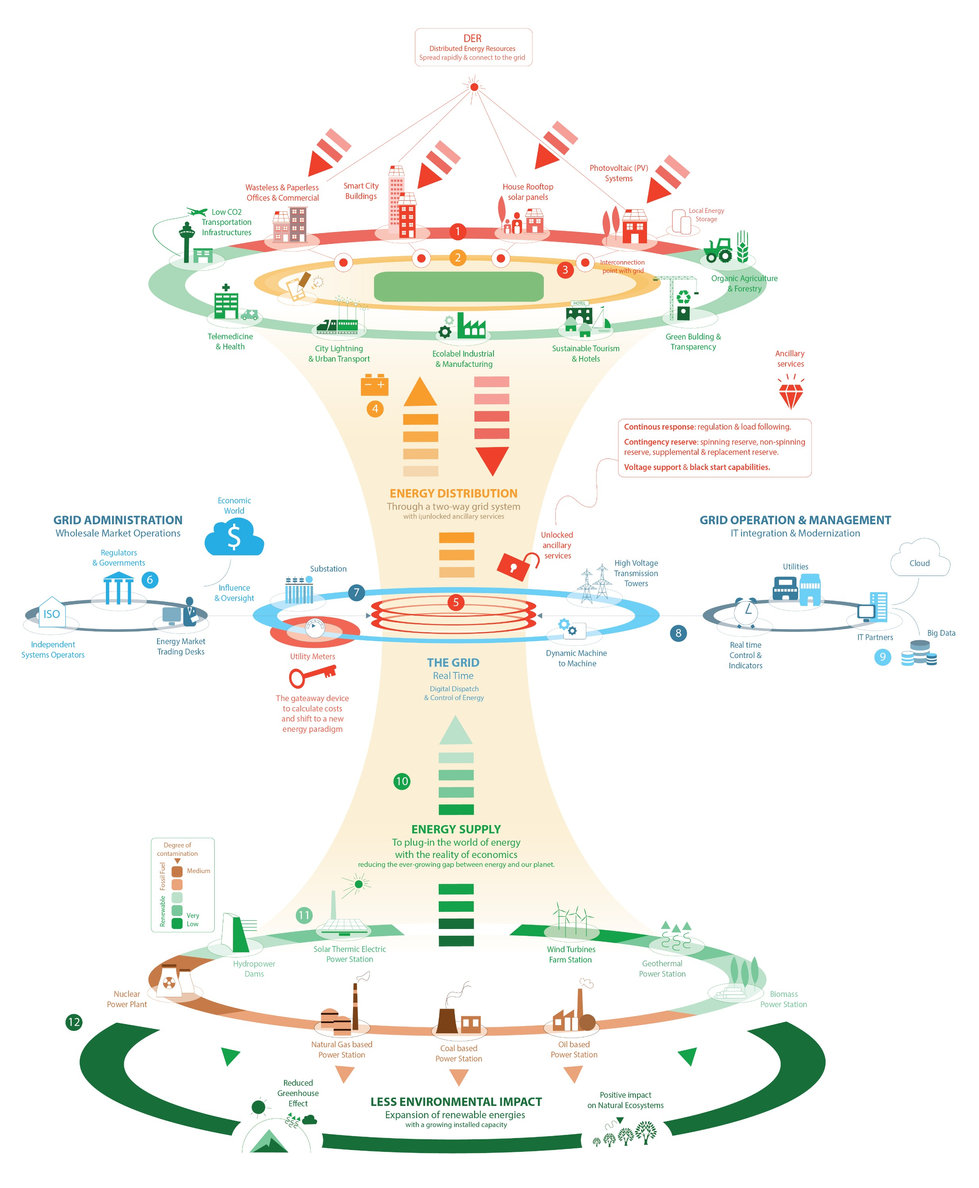
The modern grid: A bird’s-eye view
Explore twelve connections between distributed energy, grid operations and energy supply.
On this page
Current and future model
Twelve points of intelligence.
Select a number on the model or choose a topic to explore how Apparent connects the system. You can also filter by layer.
A conceptual view of energy generation, distribution and control.
1Distributed Energy
Distributed energy value
Apparent coordinates solar generation and local energy use to reduce purchased electricity and support the value of a PV system. Savings, energy yield and financial returns depend on the installation and operating conditions.
2Distributed Energy
Connected devices
Sensors and connected equipment provide information about buildings, appliances and energy resources. Apparent uses that information to support monitoring and coordinated control across the system.
3Distributed Energy
Interconnection and incentives
Adding distributed solar changes how a site interacts with the utility. Apparent helps manage power quality and site operation as part of an interconnection design. Utility approval and incentive eligibility depend on the applicable requirements.
4Distributed Energy
Battery charging and storage
Power conversion and voltage control connect variable solar output with battery charging requirements. Storage can hold energy for later use and participate in coordinated dispatch when equipment and operating limits allow.
5The Grid
Aggregated energy capacity
Coordinated resources can be presented together for demand response or ancillary services. Participation and potential revenue depend on market rules, equipment capability and the agreements in place.
6Grid Admin
Grid administration
Regulators, system operators and utilities establish the rules for grid-connected resources. Monitoring and configurable control can help a project respond to those requirements; compliance is assessed for each deployment.
7The Grid
Stable grid operation
Apparent connects field information with local control to manage distributed resources. Power-quality functions and coordinated responses can support operation as renewable output and facility demand change.
8Grid Operations
Two-way communication
Information moves from connected equipment to the control platform, while operating commands move back to the site. This two-way exchange supports coordinated decisions about generation, storage and loads.
9Grid Operations
Operational intelligence
Cloud software brings together operating data from connected energy resources. Utilities and facility teams can use that information to identify conditions, monitor performance and coordinate field actions.
10Energy Supply
Energy conversion and dispatch
Apparent combines power conversion with digital monitoring and dispatch. The objective is to make available generation useful at the point of consumption while operating within the system’s electrical limits.
11Energy Supply
A mix of energy sources
Solar, storage and other compatible resources can be coordinated within an energy system. Integration depends on the electrical design, supported equipment and controls at the site.
12Energy Supply
Environmental impact
Coordinated renewable generation and energy use can reduce reliance on higher-emission electricity sources. The outcome depends on the generation mix, the energy displaced and the operation of the installed system.
1 / 12
This is an illustrative model, not a performance calculator. Project savings, market participation and operating results depend on the site, equipment and applicable requirements.
One platform behind the model.
Cloud intelligence, on-site orchestration and power delivery connect the layers.